Diamond cutting and core drilling are closely related techniques used in construction and demolition, but they serve different purposes and are applied in different ways. Both rely on diamond-tipped tools—because diamond is extremely hard and capable of cutting through dense materials like reinforced concrete—but the methods, outcomes, and typical use cases differ significantly.
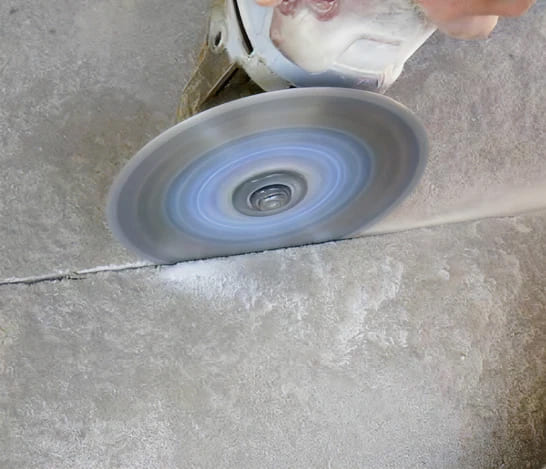
Diamond cutting is primarily about creating straight cuts through concrete, asphalt, brick, or stone. It uses diamond-embedded blades mounted on equipment such as wall saws, floor saws, or handheld cut-off saws. These blades rotate at high speed, grinding through the material rather than “cutting” it in the traditional sense. The result is a clean, precise line that can be used to remove sections of concrete, create openings for doors and windows, or cut expansion joints in slabs. Because the process is controlled and relatively vibration-free compared to older methods like jackhammering, it reduces the risk of structural damage to surrounding areas. Water is often used during cutting to cool the blade and suppress dust, improving both safety and performance.
Core drilling, on the other hand, is designed to create perfectly round holes in hard materials. Instead of a flat blade, it uses a cylindrical drill bit with diamond segments along its edge. As the bit rotates, it grinds away a circular path, leaving a solid “core” of material inside the bit that can be removed afterward. This technique is commonly used when precise holes are needed for plumbing pipes, electrical conduits, HVAC ducts, or anchor bolts. Core drilling can be performed vertically, horizontally, or even at an angle, making it highly versatile for different construction requirements.
The main difference lies in the shape and purpose of the cut. Diamond cutting produces linear cuts and is ideal for removing or shaping sections of material, while core drilling produces circular holes without significantly affecting the surrounding structure. Because of this, the equipment and setup also differ: cutting often involves larger saws and guided tracks for straight lines, whereas core drilling uses drill rigs that can be mounted on floors, walls, or ceilings for stability and accuracy.
Another important distinction is the level of intrusion and material removal. Diamond cutting typically removes entire sections and is often used in demolition or major modifications. Core drilling is more targeted and minimally invasive, removing only a cylindrical section where needed. This makes core drilling especially suitable for retrofit projects where precision is critical and damage must be minimized.
Both methods share advantages such as reduced noise, minimal vibration, and high precision compared to traditional mechanical techniques. They also improve safety by lowering the risk of uncontrolled cracking or structural weakening. However, choosing between them depends entirely on the task: if you need a straight cut or to remove a slab section, diamond cutting is the right choice; if you need a clean, round hole, core drilling is the better option.
In practice, the two techniques are often used together on the same project. For example, a contractor might use diamond cutting to open up a wall and then core drilling to install service penetrations. Understanding the difference ensures the right method is applied, leading to better efficiency, cleaner results, and reduced structural risk.