Epoxy can turn a tired concrete floor into a tough, easy-to-clean surface. But it only works when the floor and the weather are ready. Winter makes both harder. This guide covers timing, moisture and prep for epoxy coatings for concrete floors, so you know what to check before anyone opens a tin.
Why Epoxy Fails
Most failures start under the coating, not in it. Damp in the slab pushes the coating up into blisters. Dust or oil stops it from gripping. A cold, wet surface leaves a cloudy or sticky finish. Then, a few months on, the coating lifts in sheets.
The good news? Nearly all of this is avoidable. It just takes patience before the first coat.
Can You Epoxy a Concrete Floor in Winter?
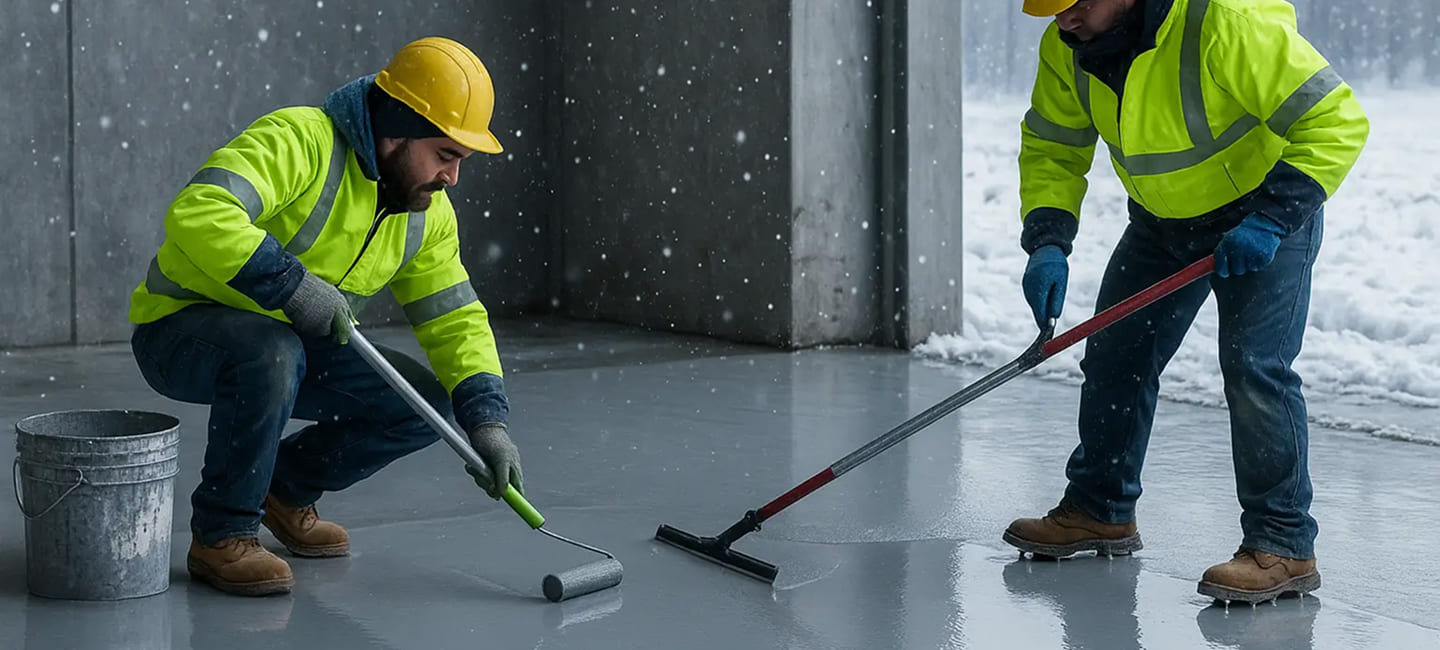
Yes, but only if conditions are controlled. Any epoxy coating for concrete comes with limits on cold and damp. Plenty of product data sheets set a minimum of around 10°C for both air and floor. Some allow a little less. Most also cap humidity at about 80 to 85 percent. Check the sheet for your product, because limits differ.
Here’s the catch. A big unit on a cold Monday morning can be well below that. Cold slows the cure and makes the mix harder to work. And a slab holds cold long after the air warms up.
Heating helps, but choose it with care. Heaters that burn fuel without a flue add moisture to the air. That can cause the very problems you’re trying to avoid.
Dew Point in Plain Words
Air holds water. When a surface is colder than a certain point, that water condenses on it. That point is called the dew point. You may not see it, but a thin film of moisture can sit on the floor.
Coat over that film and the epoxy can turn cloudy, greasy or weak. So data sheets ask for the floor to be at least 3°C above the dew point. Good crews measure floor temperature, air temperature and humidity. Many record them every few hours. They also keep the area dry and protected for about two days after coating.
Moisture: The Quiet Problem
Concrete holds water for a long time. A new slab can stay damp for months. An old slab with no damp proof membrane can draw moisture up from the ground all year.
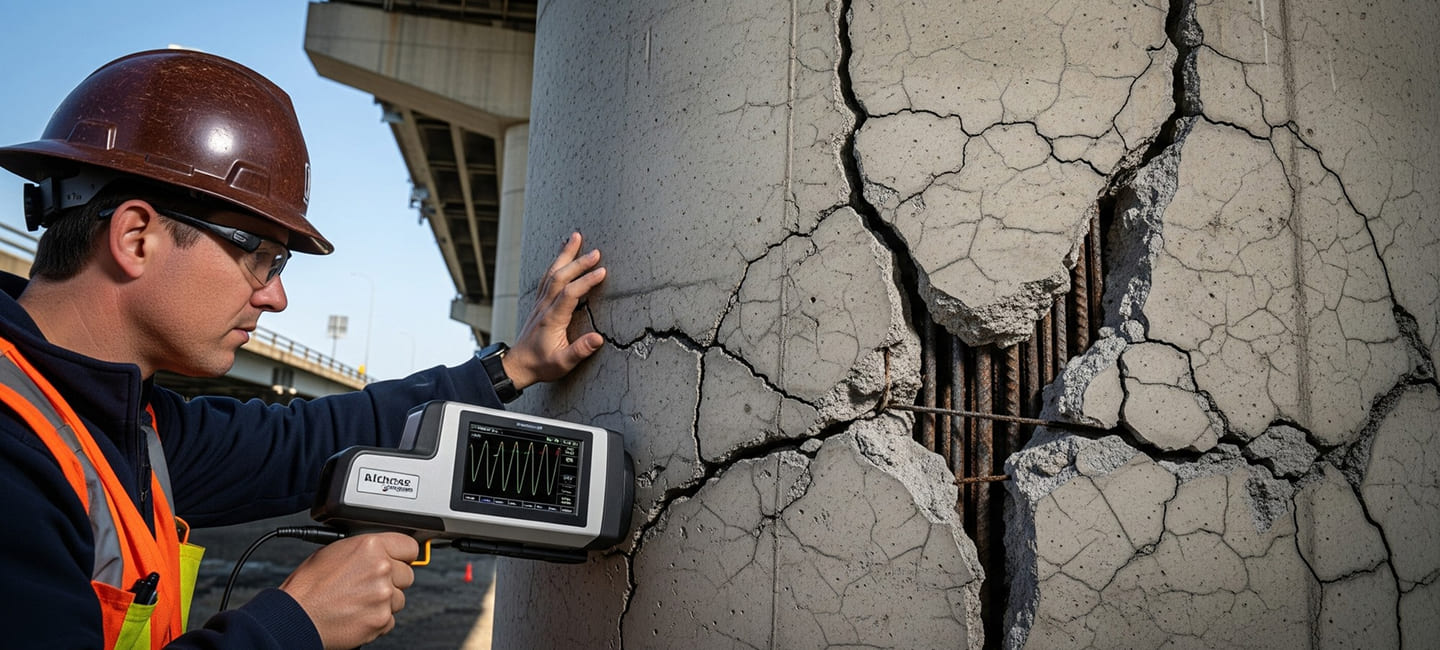
Trapped moisture is the top cause of bubbles under an epoxy coating for concrete. So an epoxy floor moisture test is a must. Crews use a moisture meter or a humidity probe. Many data sheets ask for a reading of about 4 percent by mass or less. Others ask for relative humidity below roughly 75 to 80 percent. The exact limit depends on the product.
There’s a rough check you can do yourself. Tape a clear plastic sheet to the floor and leave it for a day. Droplets underneath are a warning sign. It’s a hint only, and it doesn’t replace a proper test.
New Concrete Needs Time
Fresh slabs need to cure and dry before they take a coating. Some data sheets ask for the concrete to be at least 28 days old. Others give shorter windows for certain products. The safest route is to follow the sheet and test the slab.
Rushing is a common mistake. A project deadline may say “coat now”. The slab may say “not yet”. The slab wins.
How to Prepare Concrete for Epoxy
Prep decides how long the coating lasts. A typical order looks like this:
- Fix defects first. Fill cracks, repair spalls and deal with failed joints.
- Remove the weak skin. Grinding or shot blasting strips laitance, the thin weak layer on top.
- Open the surface. The coating needs a rough key to grip.
- Clean off oil and grease. Even a thin film stops the bond.
- Vacuum the dust. Loose dust acts like talc under the coating.
- Test moisture, temperature and dew point. Write the readings down.
- Prime, then coat.
Many data sheets also ask for sound concrete. A common figure is a minimum strength of 25 N/mm². Some ask for a pull-off strength of at least 1.5 N/mm². If the slab is weaker than that, it needs repair first.
Timing a Winter Job
Plan backwards from the coldest weeks. Do the repairs and grinding early. Save the coating for the mildest, driest days you can find. Keep the heating steady through the cure, and don’t let the floor drop overnight.
Allow extra time too. Cold stretches the wait between coats. At 10°C, one data sheet asks for around 36 hours before overcoating. At 20°C, it asks for about 24. And full cure often takes about a week at room temperature, longer when it’s cold.
So how long does epoxy take to cure on concrete? Usually the floor takes foot traffic after about a day. Heavy traffic needs more time. Ask your installer for dates in writing.
Choosing a Local Installer
Type concrete epoxy coating near me into a search box and the list gets long fast. A few questions cut it down.
- Will you test moisture, and can I see the readings?
- Will you grind or shot blast the floor, not just sweep it?
- Can you repair cracks and joints before you coat?
- Which product will you use, and can I read its data sheet?
- Will you postpone the job if the conditions are wrong?
That last one matters. A good firm will delay a coat rather than gamble with your floor.
Working With a Specialist Team
Smart Construction RO LTD works from Worksop in Nottinghamshire and serves commercial and industrial clients across the UK. The team is an approved Flexcrete contractor. It offers concrete protective coatings, plus the repair and finishing work that has to come first. A good epoxy coating for concrete is only as strong as the slab beneath it.
Planning a coating job and looking for concrete epoxy coating near me? Talk to Smart Construction RO LTD about your floor. You can read about its concrete repair work, or start at the Smart Construction.